




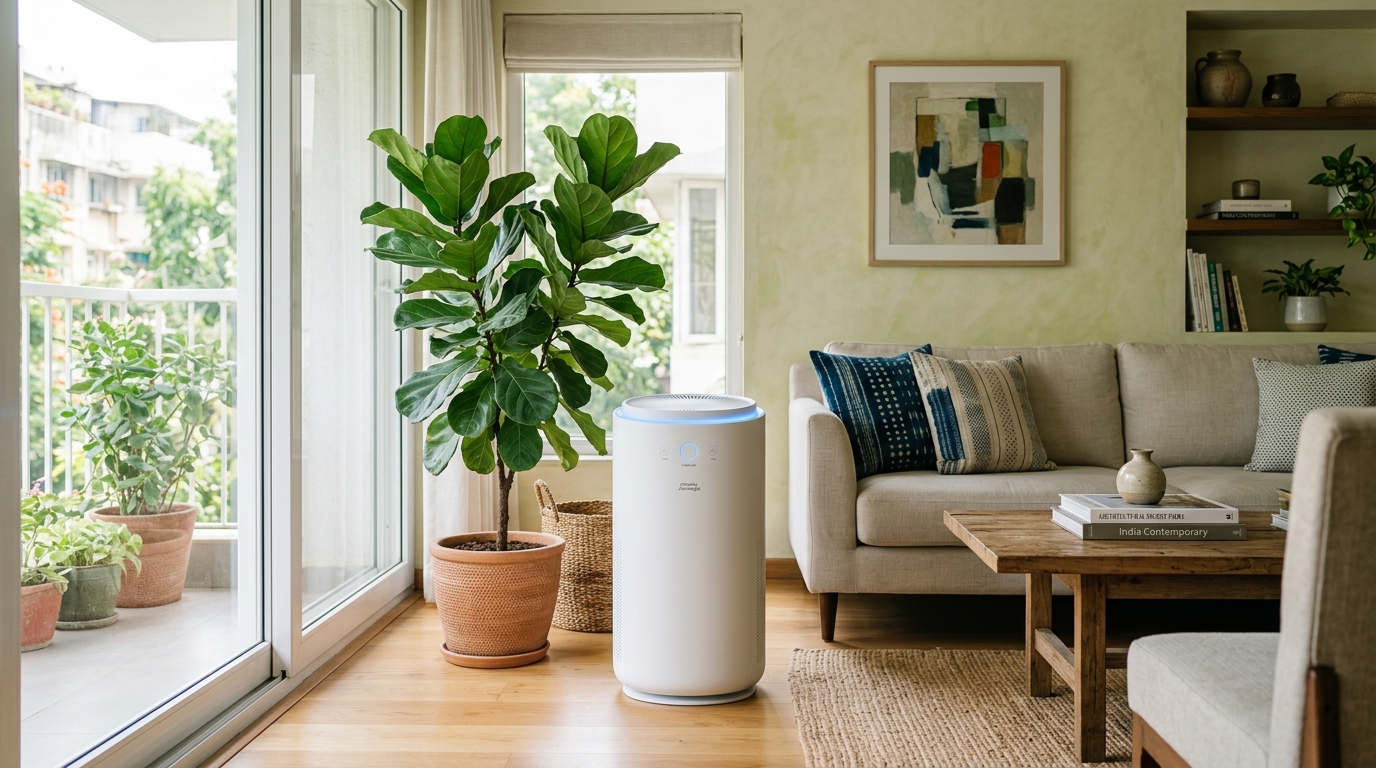
Every autumn as winter approaches across India, a familiar crisis unfolds. Crisp festive breezes turn into an acrid grey smog. In Delhi-NCR, schools shut down, outdoor workouts cease, and pharmacies exhaust stocks of inhalers and nebulizers. But air pollution in India is no longer an isolated northern problem: Mumbai's coastal humidity traps heavy diesel exhaust and construction dust; Bengaluru's tech corridors battle intense unpaved road dust surges; Kolkata endures hazardous winter inversions; and metro hubs like Hyderabad, Pune, and Chennai face sharp micro-pollutant spikes along high-density traffic arteries.
Faced with burning eyes, morning coughs, and red badges on weather apps, millions ask: Is an air purifier for home truly worth buying?
Shopping for the best air purifier in India is often confusing. Brands promote technical jargon—True HEPA, CADR, H13, and activated carbon—while concealing recurring filter costs, noise, and room sizing limits.
This comprehensive air purifier buying guide cuts through the advertising noise. Written as an honest educational resource for Indian families, it explains the science of indoor air quality, details how an air purifier in India functions under heavy pollution, guides you in selecting the right room size air purifier based on CADR, debunks persistent myths, and calculates the true three-year cost of ownership. Whether you are protecting a newborn, managing chronic asthma, or buying your first appliance, this guide will help you choose the right model with complete confidence.
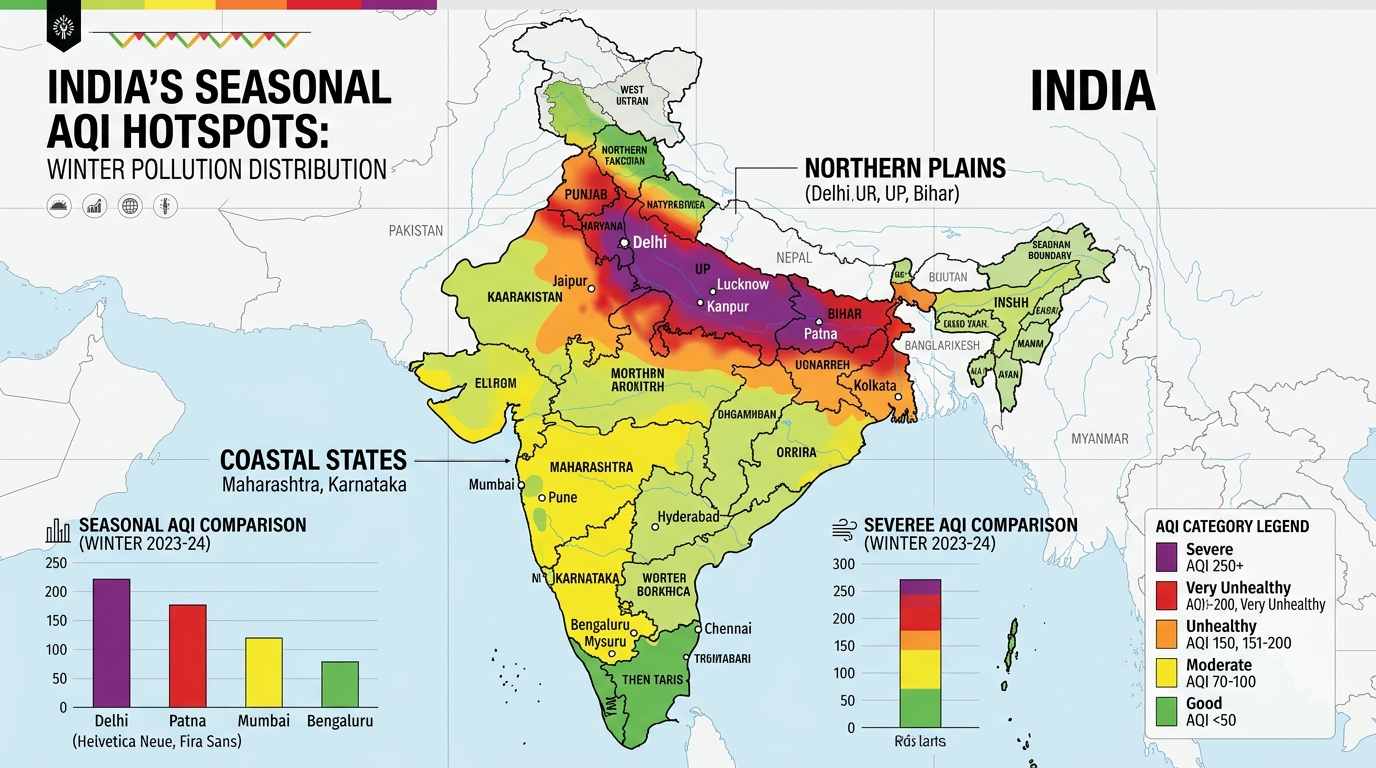
1. Why Air Pollution Is a Serious Problem in India
To understand why air purifiers have transitioned into essential home appliances, we must examine India's air quality challenge: a compounded mix of geography, stagnant winter air, crop burning, and heavy vehicular emissions.
Understanding the National Air Quality Index (AQI India)
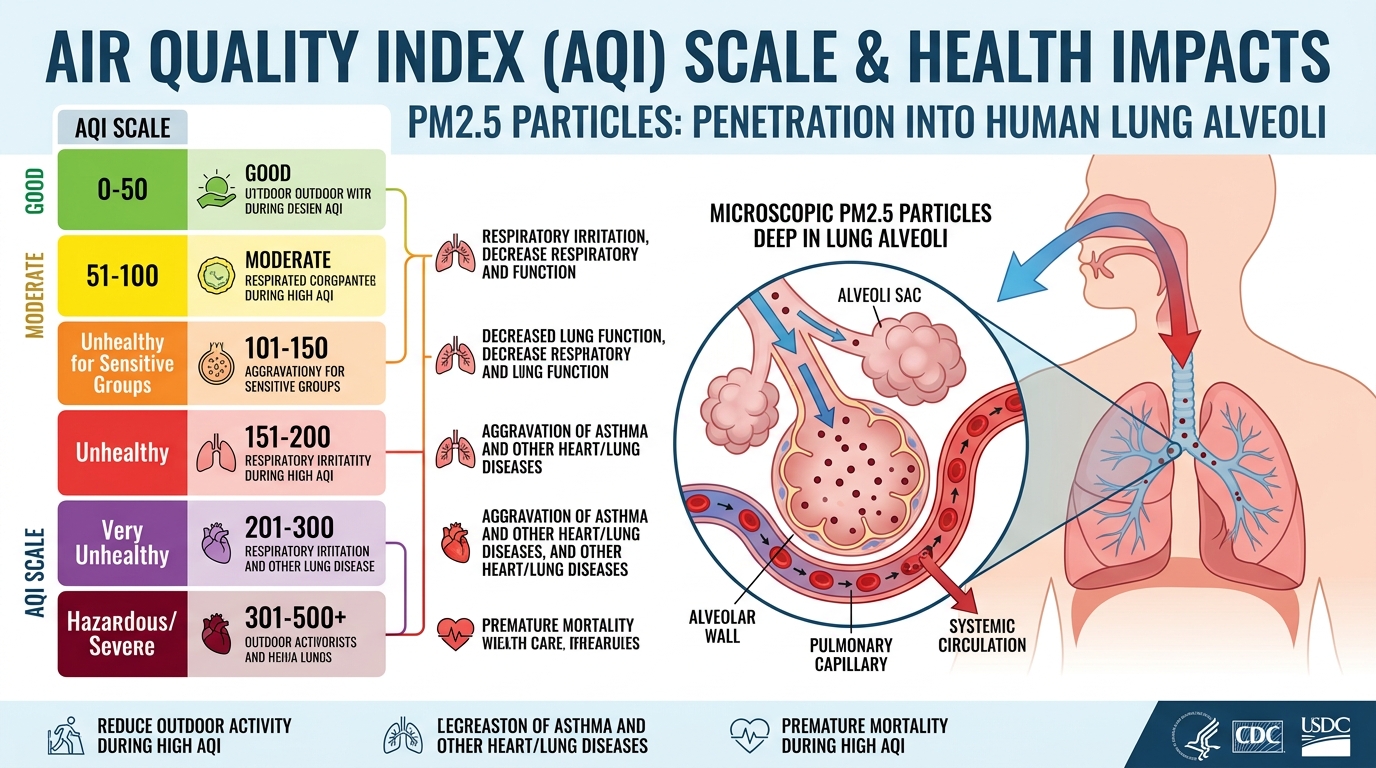
The AQI India system, established by the Central Pollution Control Board (CPCB), converts complex pollutant concentrations into an accessible score from 0 to 500. It tracks eight criteria pollutants: PM2.5, PM10, Nitrogen Dioxide (NO2), Sulfur Dioxide (SO2), Carbon Monoxide (CO), Ozone (O3), Ammonia (NH3), and Lead (Pb). Across Indian cities, particulate matter is the primary driver pushing readings into hazardous zones.
PM2.5 vs PM10: Size Dictates Health Impact
Particulate matter refers to microscopic airborne particles classified strictly by aerodynamic diameter:
- PM10 (Coarse Particles): Particles 10 micrometers or smaller (about one-seventh the width of a human hair). PM10 includes road dust, fly ash, and pollen. Nasal hairs and mucous membranes trap a large portion before reaching the lungs.
- PM2.5 (Fine Particulate Matter): Particles measuring 2.5 micrometers or smaller (about 1/30th the diameter of a human hair). PM2.5 originates from combustion: vehicle exhaust, stubble burning, coal power plants, and waste burning.
Because PM2.5 particles are microscopic, they bypass nasal filtration entirely. Inhaled deeply into the lung alveoli, they cross into the bloodstream, triggering vascular inflammation, arterial plaque buildup, and cardiovascular damage.
| AQI Range | Category | 24-Hour PM2.5 (µg/m³) | Health Impact & CPCB Advisory |
|---|---|---|---|
| 0 – 50 | Good | 0 – 30 | Minimal health impact; clean, fresh air. |
| 51 – 100 | Satisfactory | 31 – 60 | Minor breathing discomfort to sensitive individuals (asthma, allergies). |
| 101 – 200 | Moderate | 61 – 90 | Breathing discomfort to people with lung disease, asthma, and heart conditions. |
| 201 – 300 | Poor | 91 – 120 | Breathing discomfort on prolonged exposure; respiratory fatigue. |
| 301 – 400 | Very Poor | 121 – 250 | Respiratory illness on prolonged exposure; severe impact on children and seniors. |
| 401 – 500+ | Severe / Hazardous | 250+ | Affects healthy individuals and severely impacts those with pre-existing conditions. |
The World Health Organization (WHO) recommends an annual PM2.5 limit of just 5 µg/m³, and a 24-hour limit of 15 µg/m³. During peak North Indian winters, daily PM2.5 levels routinely exceed 300 to 500 µg/m³—exceeding safe limits by 20 to 30 times. Breathing that air over 24 hours delivers a lung burden equivalent to smoking 15 to 20 cigarettes daily.
2. Can Indoor Air Be Worse Than Outdoor Air?
Many homeowners assume that staying indoors and running an AC provides complete protection. In reality, indoor air quality can be two to five times more polluted than outdoor air.
Indian homes are not airtight. Microscopic PM2.5 enters through window and door gaps, mixing with potent indoor sources unique to Indian households:
- Cooking Smoke & Tadka: Heating mustard oil or ghee to high temperatures and tossing in spices releases fine particulate matter (PM2.5), acrolein, and greasy aerosols. Without a vented chimney, preparing a single meal can cause PM2.5 levels to spike from 60 µg/m³ to over 400 µg/m³ in minutes.
- Incense (Agarbatti) and Dhoop: Daily prayer rituals often involve burning incense. Combustion studies show that agarbatti emits dense particulate soot, benzene, and carbon monoxide. Burning two incense sticks in a closed room produces emissions comparable to several cigarettes.
- Mosquito Repellent Coils: Burning a mosquito coil overnight in a closed bedroom releases particulate soot equivalent to smoking roughly 75 to 100 cigarettes, along with synthetic pyrethroids.
- Volatile Organic Compounds (VOCs): New laminate furniture, fresh paints, floor cleaners, room sprays, and aerosol pest repellents continuously release chemicals like formaldehyde and toluene.
- Pet Dander, Dust Mites, and Mold: Flakes of pet skin and dust mite droppings settled in mattresses stay suspended in indoor air. In humid coastal cities like Mumbai, Chennai, and Kolkata, monsoon humidity fosters black mold behind wardrobes and inside AC units.
A standard split or window AC simply recirculates room air over a cooling coil. Its plastic mesh only catches coarse fluff. An AC cannot capture PM2.5, neutralize chemical gases, or eliminate odors. Running an AC in a sealed room without an air purifier concentrates trapped pollutants.
3. How Air Purifiers Actually Work
Behind the marketing claims, an air purifier is fundamentally a straightforward mechanical machine. An electric motor powers a fan that draws room air through physical filtration stages, trapping airborne pollutants before circulating clean air back into the room.
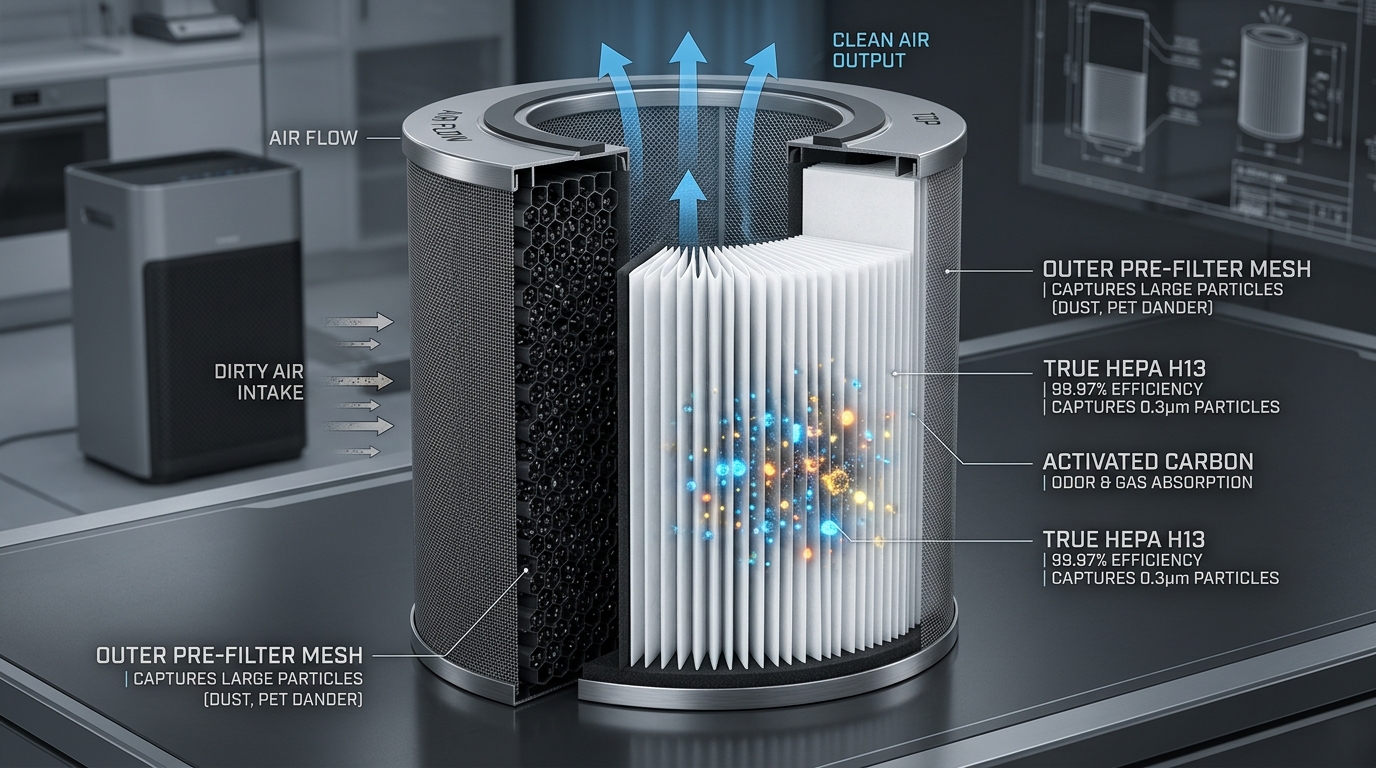
To purify air effectively, a quality air purifier for home uses a sequential multi-stage system:
Stage 1: The Washable Pre-Filter
The pre-filter is a fine mesh screen wrapped around the filter cartridge. It traps large debris such as human hair, pet fur, road dust, and lint, preventing the inner micro-filters from choking prematurely. A good pre-filter is detachable and washable with water.
Stage 2: The True HEPA Filter
The core of any legitimate air purifier is the HEPA filter (High-Efficiency Particulate Air), governed by international standards (European Standard EN 1822 / ISO 29463). Made from dense, pleated borosilicate microfibers, it traps microscopic particles through three mechanisms: inertial impaction (large particles collide head-on), interception (medium particles brush against fibers and stick), and Brownian diffusion (tiny particles under 0.1 microns wander erratically and crash into fibers).
Under international EN 1822 ratings, a True HEPA H13 filter is certified to capture at least 99.95% of particles down to 0.1–0.3 microns. Beware of unregulated terms like "HEPA-type" or "HEPA-grade"—these uncertified filters often capture only 80% of fine particles, letting toxic PM2.5 blow right through.
Stage 3: The Activated Carbon Filter
While a HEPA filter captures solid particles, it cannot stop gaseous chemical pollutants, odors, or toxic fumes. This is where the activated carbon filter becomes essential. Activated carbon is charcoal treated with steam to create millions of microscopic pores. Through chemical adsorption, gaseous pollutants, cooking smells, VOCs, and smoke bind to the carbon surface. Look for a honeycomb cartridge filled with solid carbon pellets rather than a thin sponge dusted with carbon powder.
Stage 4: Real-Time Air Quality Sensors
Purifiers use onboard sensors to monitor air cleanliness and adjust fan speeds automatically. While budget units use slow infrared LEDs, higher-quality purifiers use laser diodes that calculate PM2.5 microgram concentrations in real time. Prioritize models featuring a numeric digital PM2.5 display driven by a laser sensor.
Optional Technologies: Why Caution Is Advised
- Ionizers and Plasma: These release charged ions that attach to dust, causing particles to settle onto surfaces. However, electrical discharge often generates trace amounts of Ozone (O3), a lung irritant that can trigger coughing and bronchospasms. Avoid ionizers, or ensure verified zero-ozone test certificates.
- UV-C Lamps: Air in a purifier rushes past a tiny bulb in milliseconds—far too quickly for meaningful germicidal kill. Replacement bulbs add unnecessary recurring expense.
4. Who Should Buy an Air Purifier?
Specific groups in India have an urgent need for clean indoor air:
- Infants and Young Children: Children breathe 50% more air per kilogram of body weight than adults, and developing airways are easily inflamed by fine soot. Early-life PM2.5 exposure stunts lung growth and triggers pediatric asthma.
- Senior Citizens and Heart Patients: In older adults, fine particulate matter entering the bloodstream accelerates arterial plaque formation and significantly increases cardiac risks during winter pollution spikes.
- People with Asthma and Allergies: If you wake up with morning sneezing fits, a blocked nose, itchy eyes, or a persistent cough, an air purifier for allergies or an air purifier for asthma in the bedroom can provide noticeable relief within two to three days.
- Homes Near Busy Roads or Construction: If your apartment overlooks a major highway, ring road, flyover, or metro construction line, fine particulate soot enters your home continuously throughout the year.
- Pet Owners: Households with indoor pets benefit greatly from HEPA and carbon filtration that continuously scrubs airborne dander, loose fur, and litter box odors.
You may not urgently need an air purifier if you live in an unpolluted tier-3 town or coastal hill area where year-round ambient AQI stays below 40 µg/m³, your home has natural cross-ventilation, and nobody in the household suffers from respiratory sensitivities.
5. How to Choose the Right Air Purifier (Room Sizing & CADR)
The most common mistake buyers make is choosing an air purifier based on appearance, brand name, or an exaggerated square-footage claim on the box. An undersized purifier will run at loud maximum power while failing to bring room PM2.5 down to safe levels during heavy pollution.
Step 1: Understand CADR (Clean Air Delivery Rate)
The only standardized measure of an air purifier's cleaning performance is CADR (Clean Air Delivery Rate), tested under ANSI/AHAM AC-1 protocols. Measured in cubic meters per hour (m³/h) or CFM, CADR measures the volume of filtered air produced at top speed. A purifier claiming to cover a "500 sq ft room" with a CADR of only 150 m³/h is misleading; it cycles air once every three hours, which is ineffective in leaky Indian homes.
Step 2: The Indian 5x ACH Rule (Air Changes per Hour)
In India, where outdoor AQI regularly climbs past 300, you need an absolute minimum of 4 to 5 Air Changes per Hour (ACH). That means your purifier must cycle and filter the room's entire air volume every 12 to 15 minutes.
- Measure room area in sq ft: e.g., a standard bedroom of 14 ft × 12 ft = 168 sq. ft. (approx. 15.6 sq. meters).
- Calculate room volume with 10-ft ceilings: 168 sq. ft. × 10 ft = 1,680 cu ft = 47.5 cubic meters.
- Multiply volume by 5 ACH: 47.5 m³ × 5 = 238 m³/h minimum CADR.
For this standard 168 sq ft bedroom, choose a purifier with a CADR rating of at least 250 to 300 m³/h to clean the room quickly without needing loud turbo speeds overnight.
| Room Type & Dimensions | Floor Area (Sq. Ft.) | Room Volume (m³ @ 10ft ceiling) | Minimum CADR Required (at 5 ACH) | Recommended CADR Class |
|---|---|---|---|---|
| Compact Bedroom / Study (10 × 10 ft) | 100 sq ft | 28.3 m³ | 142 m³/h | 180 – 220 m³/h |
| Standard Bedroom (12 × 12 ft) | 144 sq ft | 40.8 m³ | 204 m³/h | 250 – 300 m³/h |
| Master Bedroom (14 × 16 ft) | 224 sq ft | 63.4 m³ | 317 m³/h | 350 – 420 m³/h |
| Large Master Suite (16 × 20 ft) | 320 sq ft | 90.6 m³ | 453 m³/h | 480 – 550 m³/h |
| Living / Dining Hall (20 × 25 ft) | 500 sq ft | 141.6 m³ | 708 m³/h | 650 – 800 m³/h (or 2 units) |
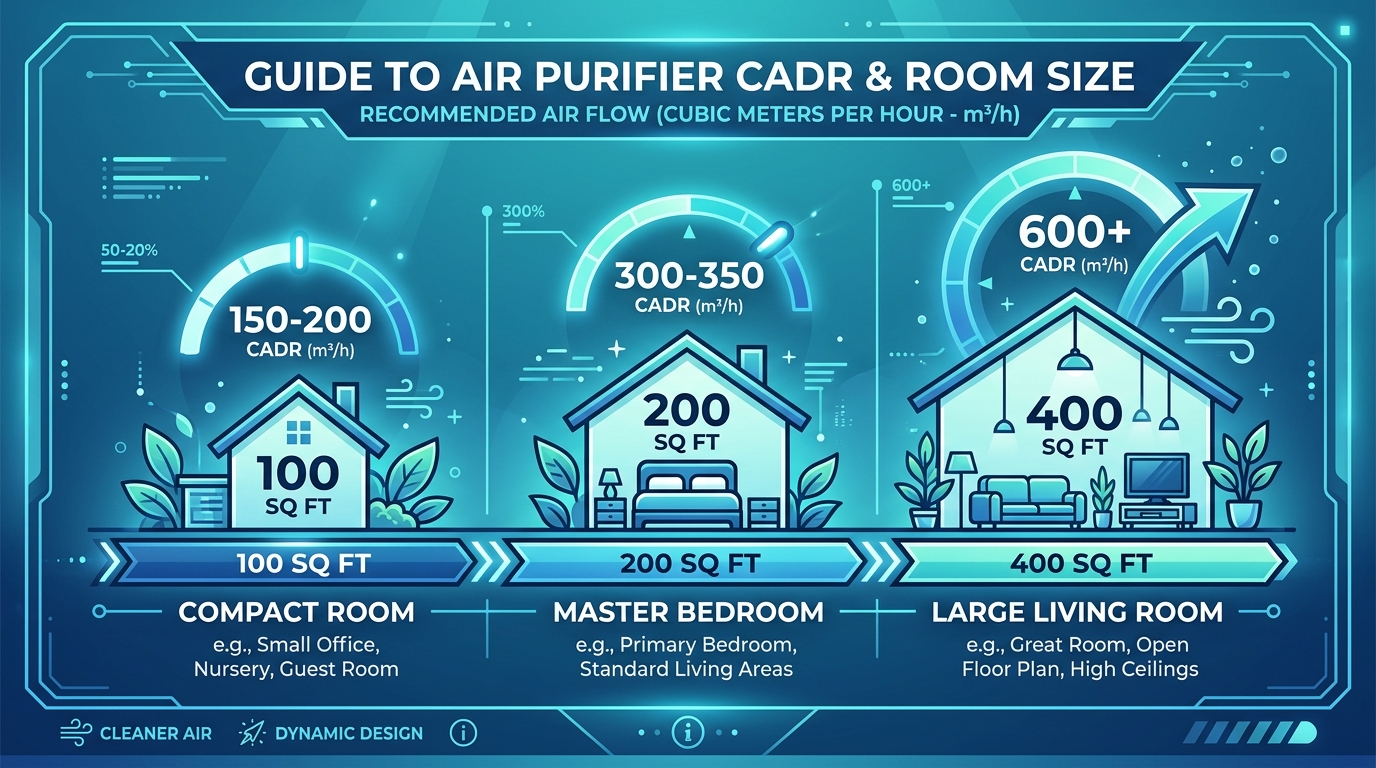
Step 3: Noise, Carbon Weight, and Power Consumption
- Noise in Sleep Mode: Must operate at or below 30–32 dB(A) to avoid disrupting sleep. Maximum turbo mode should stay below 58–62 dB(A).
- Carbon Weight: Verify that the activated carbon layer contains solid granular pellets (at least 200–300 grams), rather than a thin carbon-dusted sponge.
- Power Consumption: Modern air purifiers utilize energy-efficient brushless DC (BLDC) motors consuming 25 to 55 Watts on max, and just 4 to 8 Watts in sleep mode—far lower than a ceiling fan (75W).
6. Features That Actually Matter
Here is an honest breakdown of what is truly essential versus marketing fluff:
| Feature | Importance Level | Practical Guidance |
|---|---|---|
| Certified True HEPA H13 | Essential (Must-Have) | The only certified standard guaranteeing 99.95% particulate capture down to 0.1–0.3 microns. |
| Sufficient CADR (4–5 ACH) | Essential (Must-Have) | Ensures clean air is circulated effectively throughout the entire volume of the room. |
| Numeric PM2.5 Display | Essential (Must-Have) | A digital microgram counter shows real performance. Colored LED rings can hide poor air quality. |
| Intelligent Auto Mode | Essential (Must-Have) | Adjusts fan speed dynamically based on live particulate levels, saving power and reducing noise. |
| Sleep Mode with Display Off | Essential (Must-Have) | Dims bright LED displays and lowers fan speed for dark, whisper-quiet bedroom sleeping. |
| Filter Replacement Alert | Useful | Alerts you when the filter has reached the end of its useful life based on usage hours and dust load. |
| Wi-Fi App Connectivity | Useful | Allows you to turn the purifier on 20 minutes before arriving home from work so your room is clean. |
| Child Lock | Useful | Prevents curious toddlers from changing settings or turning off the machine accidentally. |
| UV-C Lamps | Optional / Gimmick | Air rushes past the bulb too quickly for effective germicidal kill; replacement bulbs are costly. |
| Ionizers / Plasma Clusters | Caution Advised | Can produce trace ozone that irritates lungs and triggers asthma. Keep turned off if present. |
| Mosquito Catcher Traps | Gimmick | Sticky paper inserts catch very few insects while obstructing air intake vents. |
7. Air Purifier Myths Debunked
A great deal of confusion surrounds air purifiers in India. Let us clear up the most common misconceptions with scientific facts.
Myth 1: "Opening Windows in the Afternoon Safely Airs Out the House"
The Reality: In winter across northern and western India, ground-level thermal inversions trap pollution all day. Even when afternoon sun makes skies appear brighter, PM2.5 levels at 2:00 PM often remain between 150 and 250 µg/m³. Opening windows invites fresh soot into your home that settles into fabrics, forcing your purifier to work twice as hard once shut.
Myth 2: "Air Purifiers Consume Oxygen in a Closed Room"
The Reality: An air purifier is not a heater or engine; it involves zero combustion and consumes no oxygen. It simply passes air through fine fibrous mesh. Oxygen (O2) molecules are thousands of times smaller than HEPA micropores and pass through completely unhindered without altering indoor oxygen levels.
Myth 3: "The Most Expensive Imported Purifier Is Always the Best"
The Reality: Luxury European air purifiers costing ₹50,000 to ₹80,000 are often designed for European pollution baselines of 20 to 40 µg/m³. Many feature small CADR capacities and modest carbon filters that choke quickly under Indian winter loads. A well-engineered mid-range purifier (₹10,000–₹16,000) with a 350+ m³/h CADR and affordable, accessible replacement filters will perform far better in an Indian home.
Myth 4: "One Large Purifier in the Living Room Cleans the Whole House"
The Reality: Air purifiers rely on mechanical air circulation that cannot pull stagnant air through closed bedroom doors or around hallway corners. For a multi-room flat, it is much more effective to place dedicated units in each bedroom where you sleep than to rely on a single central unit.
Myth 5: "Houseplants Can Clean the Air Just as Well"
The Reality: The claim that houseplants purify indoor air originates from a 1989 NASA study conducted in small sealed chambers over days. Real-world building research shows you would need between 80 and 100 indoor potted plants per room to match a modest 200 m³/h air purifier! Plants enhance aesthetics, but they cannot handle serious particulate smog.
8. How to Use an Air Purifier Correctly
Buying a quality purifier is only half the solution; operating and maintaining it correctly determines whether you breathe truly clean air.
1. Optimal Placement
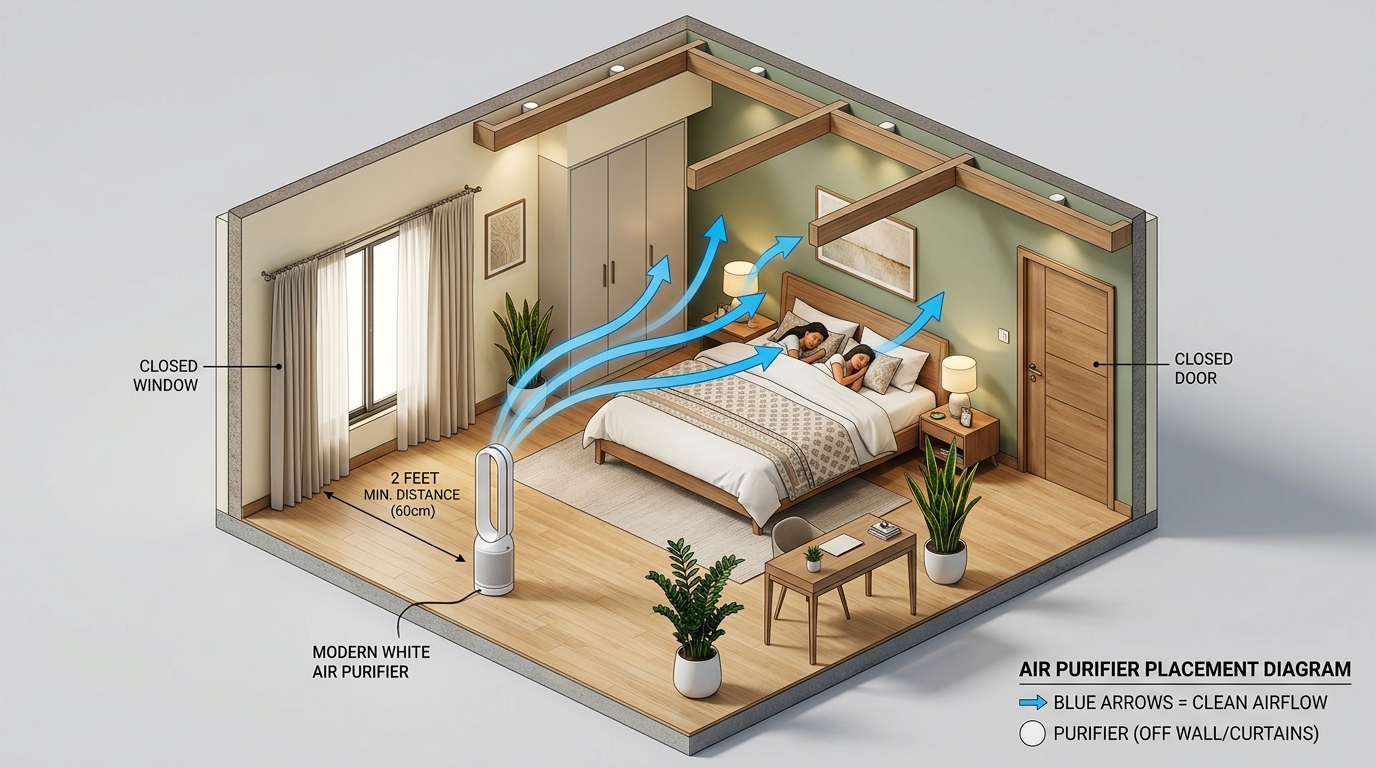
- Keep Clear of Obstructions: Maintain at least 1 to 2 feet (30–60 cm) clearance from walls or curtains to avoid restricting air intake by up to 50%.
- Avoid Corners and Alcoves: Placing the purifier in a tight corner traps clean air in a dead pocket, preventing it from circulating across the rest of the room.
- Position Near the Bed: Place the purifier 4 to 6 feet away from where you sleep, directing clean airflow into your breathing zone.
2. The Closed-Door Rule & Ventilation Protocol
An air purifier functions like an air conditioner: it cannot clean the outdoors. Keep external balcony doors and windows closed while running. To manage Carbon Dioxide (CO2) buildup from breathing, check your local AQI app to identify the cleanest window of the day (usually 12:00 PM to 3:00 PM). Open opposing windows for 15 to 20 minutes for quick cross-ventilation, then seal all windows, set your purifier to Turbo speed for 20 minutes, and return it to Auto or Sleep mode.
3. Running Schedule & Filter Maintenance
- Run 24/7 in Peak Winter: During severe pollution months (October to February), run the purifier continuously on Auto or Sleep mode. Low-speed operation consumes under 15 Watts (costing under ₹4 to ₹5 daily) and prevents indoor particulate accumulation.
- Clean Pre-Filter Bi-Weekly: Every 15 days, remove the outer pre-filter mesh and vacuum or wash off accumulated lint under running water. Ensure it is completely dry before reinstalling.
- Never Wash HEPA or Carbon Filters: Water permanently ruins the microscopic glass microfiber structure and electrostatic charge of True HEPA paper. Water also ruins activated carbon granules. Only gently vacuum the exterior surface of the HEPA cartridge.
- Clean the Laser Sensor Lens: Every 60 days, open the sensor hatch and gently clean the optical lens with a dry cotton swab to maintain accurate AQI readings.
9. Running Costs in India (Total Cost of Ownership)
When purchasing an air purifier, buyers should evaluate the Total Cost of Ownership (TCO) across three years of operation.
Component 1: Electricity Costs
Calculating realistic electricity expenses for an Indian household:
- Average power draw across 24 hours (mix of Auto, Turbo, and Sleep modes): 25 Watts.
- Daily runtime: 16 hours. Daily energy consumption: 25W × 16 hours = 400 Watt-hours = 0.40 kWh (units) per day.
- Monthly energy consumption: 0.40 units × 30 days = 12 units per month.
- At an average residential tariff of ₹8 per unit: 12 × ₹8 = ₹96 per month (approx. ₹1,150 per year). Running an air purifier costs less per month than a single ceiling fan.
Component 2: Filter Replacement Expenses
Replacement filters represent the primary ongoing expense. In polluted Indian metropolitan conditions, a HEPA filter typically lasts between 6 and 9 months of heavy winter use. Original replacement filter cartridges generally cost between ₹1,800 and ₹3,500 depending on brand and carbon density. Before purchasing any purifier, always verify that replacement filters are readily in stock on Amazon, Flipkart, or the brand's website.
| Expense Category | Year 1 (Initial Setup) | Year 2 (Maintenance) | Year 3 (Maintenance) | 3-Year Total Cost |
|---|---|---|---|---|
| Machine Purchase (350 m³/h CADR Class) | ₹12,500 (includes 1st filter) | ₹0 | ₹0 | ₹12,500 |
| Replacement Filter Cartridges (1 per year) | ₹0 (included with machine) | ₹2,200 | ₹2,200 | ₹4,400 |
| Electricity (16 hrs/day @ ₹8/unit) | ₹1,150 | ₹1,150 | ₹1,150 | ₹3,450 |
| Annual Operating Subtotal | ₹13,650 | ₹3,350 | ₹3,350 | ₹20,350 |
*Note: Figures are realistic consumer estimates for standard metropolitan use. Premium high-capacity purifiers with larger carbon cartridges will have proportionately higher filter replacement costs (₹3,500–₹5,000).
10. The Ultimate Air Purifier Buying Checklist
Before completing your purchase, review your selected model against this quick 8-point checklist:
- Room Sizing Verified: Have you calculated your room's cubic volume and verified that the CADR provides at least 4 to 5 Air Changes per Hour (ACH)?
- Certified True HEPA H13: Does the specification explicitly confirm certified "True HEPA H13" (EN 1822 standard) capturing 99.95% of fine particles, rather than vague "HEPA-type" claims?
- Solid Activated Carbon: Does the filter contain granular pelletized carbon (at least 200–300g) rather than a thin carbon-coated sponge?
- Replacement Filters Available: Have you checked online stores to confirm genuine replacement filters are in stock and reasonably priced (under ₹2,500–₹3,500)?
- Quiet Sleep Mode: Is the sleep mode noise level rated at or below 32 dB(A) for comfortable overnight sleep?
- Accurate Laser Sensor: Does the purifier include an onboard laser particle sensor with a real-time digital PM2.5 display?
- Zero Ozone Risk: If the model includes an ionizer, can it be permanently switched off, or does it carry certified zero-ozone lab documentation?
- Authorized Service Support: Does the brand have authorized service centers or on-site warranty repair support in your city?
Frequently Asked Questions (FAQ)
Yes. Urban PM2.5 levels regularly exceed WHO safety limits by 10 to 30 times. High-efficiency filtration reduces respiratory strain, morning sneezing, asthma attacks, and cardiovascular inflammation for children, seniors, and allergy sufferers.
Northern cities (Delhi-NCR, Lucknow, Kanpur, Patna) need purifiers urgently in winter. However, coastal and southern metros (Mumbai, Kolkata, Bengaluru, Hyderabad, Pune) face heavy construction dust and vehicular diesel soot year-round.
A certified True HEPA H13 filter captures 99.95% of airborne particles down to 0.1 microns, including virtually all PM2.5 and PM10. In a closed bedroom, it lowers PM2.5 under 25 µg/m³ in 30 minutes.
Yes. Purifiers use continuous-duty BLDC motors. Running 24/7 on Auto or Sleep mode maintains clean air continuously, costing under ₹4 to ₹5 per day in electricity.
Yes, it is highly recommended. Choose a purely mechanical True HEPA model, ensure any optional ionizer is switched off to eliminate ozone risks, and run it in quiet Sleep mode.
In Indian cities, HEPA filters last 6 to 9 months of regular winter use. Replace when the machine's filter indicator lights up, or when the pleated paper turns dark charcoal grey.
Yes. The AC cools and dehumidifies, while the purifier removes PM2.5 and odors. Place the purifier a few feet away from the direct cold air stream for optimal circulation.
No. Airflow cannot travel effectively through closed doors or hallways. Prioritize dedicated bedroom purifiers where family members spend 8 hours sleeping before placing a unit in the living area.
An activated carbon filter absorbs cooking odors and spices. However, heavy frying grease can coat HEPA fibers. Always run an outdoor-vented kitchen chimney during cooking.
H13 captures 99.95% of particles at 0.3 microns; H14 captures 99.995%. H13 is ideal for Indian homes because it provides medical-grade air with quiet fans, whereas H14 requires loud industrial motors.
No. Ionizers often produce trace ozone, which irritates respiratory airways and triggers asthma attacks. Asthma patients should stick strictly to mechanical True HEPA purifiers without ionizers.
Never wash a True HEPA or activated carbon filter with water. Water destroys the microscopic fiber web and electrostatic charge. Only the plastic mesh outer pre-filter is washable.
Spikes are triggered by household activities: burning incense, frying with oil, smoking, mosquito coils, or dusting blankets. If none occurred, clean the laser sensor lens with a dry cotton swab.
Yes. True HEPA captures mold spores (3–10 µm), bacteria (0.5–5 µm), and virus droplets (0.1–1 µm) via impaction and diffusion, significantly reducing airborne pathogens in enclosed rooms.
Seal all doors and windows, run your air purifier on high speed continuously, avoid burning incense or frying, and wear a snug-fitting N95 respirator mask whenever stepping outdoors.
Three signs: the onboard filter indicator reaches 0%, the pleated HEPA paper turns dark grey or black, and the exhaust air carries a dusty or sour smell indicating carbon saturation.
Conclusion: The Smart Buyer's Final Verdict
Choosing an air purifier in India comes down to four fundamental priorities:
- Match CADR to Your Room Volume: Ensure the unit delivers 4 to 5 Air Changes per Hour for your specific bedroom size. Buying an undersized machine is the most common reason for disappointing results.
- Insist on True HEPA H13: Choose certified H13 mechanical filtration and avoid unverified "HEPA-type" shortcuts.
- Check Activated Carbon Weight: Make sure the filter includes real granular carbon pellets to handle Indian cooking odors and harmful VOCs.
- Factor in Long-Term Costs: Verify the price and availability of replacement filters before purchasing. A dependable purifier with affordable ₹2,000 replacement filters will protect your family far more reliably over three years than a costly luxury brand with discontinued filter cartridges.
Clean indoor air is no longer a luxury in modern India—it is a vital pillar of preventive family health. By choosing a properly sized, mechanically proven air purifier, you create a safe sanctuary where your children, parents, and lungs can breathe clean, restorative air every single day.