





A laptop is a major personal and professional investment designed to serve you for the next 3 to 6 years. With rapid technological leaps—including AI-accelerated Neural Processing Units (NPUs), Apple Silicon M-series chips, razor-sharp OLED displays, high-efficiency DDR5 RAM, and ultrafast PCIe Gen 4/Gen 5 NVMe SSDs—navigating specifications can be complex.
Our complete Laptop Buying Guide breaks down every core subsystem, helping you configure the ideal balance of processing speed, battery runtime, thermal cooling, display ergonomics, and port connectivity for your exact budget.
Contents at a Glance
1. The Processor (CPU): The Engine of Your Machine
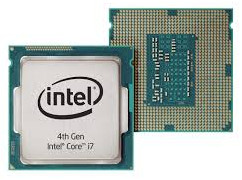
The Central Processing Unit (CPU) governs how swiftly apps launch, data processes, and code compiles. Today, three major CPU architectures dominate laptops:
Intel Core & Core Ultra
Core i3 / Ultra 3: Dual/quad performance cores for web browsing, streaming, and MS Office.
Core i5 / Ultra 5: Mainstream sweet spot for software developers, multitasking, and casual gaming.
Core i7 / i9 / Ultra 7 / Ultra 9: 14–24 core hybrid architectures (P-cores + E-cores) for 4K video rendering, heavy IDE compilation, and AAA gaming.
Intel Core Ultra chips feature built-in NPUs for offline AI tasks and power-saving Low-Power Island cores.
AMD Ryzen (7000 / 8000 / AI 300)
Ryzen 5: Renowned for outstanding multi-threaded CPU efficiency and class-leading integrated Radeon graphics (Radeon 760M/780M).
Ryzen 7 / 9 (Zen 4 & Zen 5): Outstanding sustained performance under heavy workloads with exceptional thermal efficiency on battery power.
Ryzen AI series delivers up to 50+ TOPS of dedicated NPU compute for Copilot+ AI experiences.
Apple Silicon (M2 / M3 / M4)
Unified memory architecture with incredible performance-per-watt efficiency. Delivers silent fanless operation on MacBook Air, near-identical performance whether plugged in or on battery, and 15 to 22 hours of real-world battery life.
2. RAM (System Memory): How Much Do You Really Need?
Random Access Memory (RAM) holds active programs and open browser tabs. Insufficient RAM forces your OS to swap data to the SSD, creating sluggishness and micro-stutters.
| RAM Capacity | Recommended Users & Tasks | Multitasking Headroom | Future-Proofing Horizon |
|---|---|---|---|
| 8 GB DDR4 / DDR5 | Entry-level school work, basic browsing, video streaming | 5–10 browser tabs + MS Word | 1–2 years (Bare minimum today) |
| 16 GB DDR5 / LPDDR5X | Recommended Standard: Office professionals, programmers, students, casual gamers | 25+ browser tabs, IDEs, Spotify, Zoom, photo editing | 3 to 5 years (Sweet Spot) |
| 32 GB+ DDR5 | 4K/8K video editors, 3D animators, Docker containers, data scientists, hardcore gamers | Heavy rendering suites, virtual machines, massive datasets | 5+ years |
3. SSD Storage: Speed, Types & Capacities
Never purchase a modern laptop that uses an old spinning Hard Disk Drive (HDD) as its primary boot drive. Solid State Drives (SSDs) are 5x to 30x faster, silent, and shock-resistant.
PCIe NVMe M.2 SSD (Gen 3 vs Gen 4)
PCIe Gen 4 NVMe SSDs achieve read speeds of 3,500 to 7,000 MB/s, booting Windows in 5–8 seconds and launching heavy applications instantaneously.
Recommended Storage Capacities
512 GB SSD: Baseline standard for operating system, software tools, and documents.
1 TB SSD: Recommended for gamers, media creators, and developers with large project libraries.
2 TB+ SSD: For professional video editors dealing with uncompressed raw 4K footage.
4. Displays: Panel Tech, Resolution & Color Gamuts
Since your eyes are glued to the screen for hours, the display quality directly impacts eye comfort, productivity, and media enjoyment.
OLED Panels
Individual organic self-lit pixels provide 1,000,000:1 contrast ratio, true pitch blacks, 0.2ms ultra-fast response times, 100% DCI-P3 cinematic color coverage, and TÜV Rheinland certified low blue light emission.
IPS Anti-Glare Panels
Wide 178° viewing angles, natural color reproduction, matte non-reflective coatings for outdoor/bright office use, and zero risk of burn-in. Ideal for everyday office workstations.
High Refresh Rates (120Hz – 240Hz)
Provides ultra-smooth cursor movement, fluid scrolling through code and documents, and competitive edge in fast-paced esports gaming (CS2, Valorant, Apex Legends).
Display Buying Rules of Thumb
- Aspect Ratio: Prefer 16:10 aspect ratio over 16:9 for 11% more vertical space to read documents and code without constant scrolling.
- Brightness: Minimum 300 nits for indoor use; 400–500+ nits if working near sunlit windows or outdoors.
- Resolution: Full HD (1920 × 1200) for 13"–14" screens; 2.5K / 2.8K (2880 × 1800) or 4K for 15"–16" screens for razor-sharp typography.
5. Graphics Cards: Integrated vs Dedicated GPUs
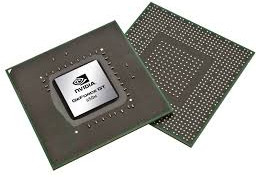
The Graphics Processing Unit (GPU) handles 3D rendering, gaming physics, video encoding/decoding, and AI model weights.
| GPU Category | Models / Hardware | Target Use-Case | Battery Impact |
|---|---|---|---|
| Integrated GPU (iGPU) | Intel Arc Graphics, AMD Radeon 780M / 890M, Apple M3/M4 GPU | Everyday tasks, 4K streaming, photo editing, casual games (GTA V, League of Legends at 1080p). | Extremely power efficient (10–18+ hr battery life). |
| Entry Dedicated GPU | NVIDIA GeForce RTX 3050 (4GB/6GB) / RTX 4050 (6GB) | 1080p medium-high gaming, 1080p/4K video editing, entry 3D CAD modeling. | Moderate battery consumption (4–6 hr battery life). |
| Performance Dedicated GPU | NVIDIA GeForce RTX 4060 (8GB) / RTX 4070 (8GB) | High-FPS 1440p gaming with DLSS 3 Ray Reconstruction, Premiere/DaVinci Resolve rendering, Blender 3D. | High power (3–5 hr battery life; requires AC adapter for full performance). |
| Enthusiast Workstation GPU | NVIDIA GeForce RTX 4080 (12GB) / RTX 4090 (16GB) | Uncompromised 4K ultra AAA gaming, local LLM fine-tuning, complex physics simulations. | Heavy brick charger required; desktop-replacement tier. |
6. Battery Capacity & Thermal Cooling Systems
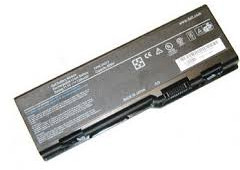
Battery capacity is measured in Watt-hours (Wh). Standard airline regulations allow up to 99.9 Wh batteries.
Battery Sizing Guide
45Wh – 56Wh: Standard for budget/midrange laptops (4–7 hours real-world office runtime).
70Wh – 99Wh: Large capacity found in premium ultrabooks and flagship gaming rigs (8–14+ hours runtime on ultrabooks).
USB-C Power Delivery (PD) Fast Charging
Always ensure the laptop supports 65W to 100W+ USB-C PD charging so you can power your phone, tablet, and laptop with a single compact GaN wall charger.
Cooling: Heat Pipes, Vapor Chambers & Liquid Metal
High-wattage processors generate substantial heat. Look for laptops with dual cooling fans, multi-copper heat pipes, or vapor chambers with rear exhaust vents to prevent thermal throttling during extended rendering sessions.
7. Keyboards, Precision Touchpads & Port Connectivity
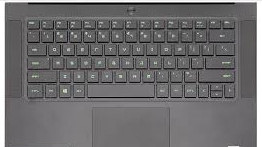
Ergonomics make a profound difference to daily comfort. Pay close attention to keyboard travel, trackpad glass coatings, and port versatility.
Keyboard & Biometrics
Look for 1.3mm to 1.5mm key travel with dished keycaps, multi-stage white/RGB backlighting, and Windows Hello fingerprint readers or IR facial recognition webcams for instant secure sign-in.
Glass Precision Touchpad
Ensure a large glass-surfaced trackpad with Microsoft Precision drivers for smooth multi-touch gestures (3-finger desktop switches, pinch-to-zoom).
Essential Ports Checklist
At least 2 × USB-C (Thunderbolt 4 / USB4), 1–2 × USB-A 3.2 ports for mouse/flash drives, 1 × HDMI 2.1 for external monitors, 1 × 3.5mm combo audio jack, and an SD card reader for photographers.
8. Choosing by Laptop Category & Form Factor
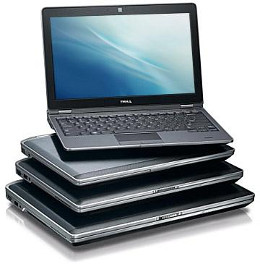
Match your daily lifestyle to the right form factor:
| Form Factor | Typical Weight | Key Strengths | Recommended Models |
|---|---|---|---|
| Thin & Light Ultrabook | 1.0 – 1.4 kg | All-day battery life, all-metal aluminum build, whisper quiet, highly portable. | MacBook Air (M2/M3), ASUS Zenbook 14 OLED, Dell XPS 13, Lenovo Yoga Slim 7i. |
| 2-in-1 Convertible (360° Hinge) | 1.2 – 1.6 kg | Touchscreen with active stylus pen support for digital illustration, signing PDFs, and tent mode media viewing. | HP Envy x360, Lenovo Yoga 7, Samsung Galaxy Book 360, Dell Inspiron 2-in-1. |
| Mainstream Workhorse | 1.5 – 1.9 kg | Affordable pricing, full numeric keypad, extensive ports, upgradable dual RAM slots. | HP 15s / Pavilion, Acer Aspire 3/5, Lenovo IdeaPad Slim 3/5, Dell 15. |
| Gaming & Creator Powerhouse | 2.1 – 2.7 kg | High TGP dedicated graphics, high airflow fans, 165Hz+ displays, RGB backlights. | Lenovo LOQ / Legion, ASUS ROG Zephyrus / TUF Gaming, Acer Predator Helios / Nitro, HP Victus / OMEN. |
Find the best deals and lowest prices on laptops in India across all top stores:
Compare All Laptop Prices Now →9. Top Laptop Brands in India
Apple (MacBook)
Industry-leading battery life (15–20 hrs), flawless trackpads, high resale value, premium aluminum unibody, and silent fanless operation on the MacBook Air.
ASUS
Pioneer of affordable Lumina OLED displays (Zenbook/Vivobook series), lightweight engineering, and top-tier ROG gaming laptops with dual screens.
Lenovo
Legendary keyboards (ThinkPad / Yoga / Legion / LOQ), durable construction, reliable service network across tier 1 and tier 2 Indian cities.
HP (Hewlett Packard)
Massive market share in India, widespread authorized service centers, reliable Pavilion, Envy, Spectre, and OMEN gaming lineups.
Dell
Renowned for enterprise reliability, premium XPS aesthetics, rugged Inspiron everyday laptops, and G-series gaming notebooks.
Acer
Exceptional value-for-money specifications across Aspire, Swift Go, and Predator Helios/Nitro gaming laptops with top-spec GPUs at budget prices.
10. The Ultimate Laptop Buying Checklist
- ✓ Processor: At least 13th/14th Gen Intel Core i5 / Core Ultra 5, AMD Ryzen 5 7000/8000 series, or Apple M2/M3 chip.
- ✓ RAM: 16 GB minimum for future-proof multitasking; verify if RAM is upgradeable (SO-DIMM).
- ✓ Storage: 512 GB or 1 TB PCIe NVMe SSD (avoid mechanical HDDs or slow eMMC storage).
- ✓ Display: 1920 × 1200 (16:10 aspect ratio) IPS with 300+ nits brightness or vibrant OLED panel.
- ✓ Charging & Ports: USB-C Power Delivery (PD) fast charging with at least 1 full-size HDMI and 2 USB-A ports.
- ✓ Battery: Minimum 50Wh to 70Wh battery capacity for reliable 6–10 hour portable work.
- ✓ Warranty: Look for 1-year onsite warranty plus options for extended 2-year accidental damage protection (ADP).
11. In-Depth Frequently Asked Questions (FAQs)
Should I choose a MacBook or a Windows laptop?
Choose a MacBook if your priorities are 15–20 hour battery life, silent operation, flawless trackpad, macOS ecosystem integration with iPhone/iPad, and creative video/photo editing. Choose Windows if you need AAA PC gaming, specialized engineering/CAD software, dual-boot flexibility, touchscreen/stylus convertible hardware, or budget upgradeable components under ₹50,000.
Is 8GB RAM enough for a laptop in 2026?
8GB RAM is acceptable only for basic school tasks, video streaming, and simple word processing. For smooth everyday productivity, modern web applications, and Windows 11 background services, 16GB RAM is strongly recommended to prevent sluggish swapping and ensure your laptop stays fast for 4+ years.
Are OLED displays safe from burn-in on laptops?
Modern laptop OLED panels (such as ASUS Lumina OLED) incorporate automated pixel refresh routines, pixel shifting, low-power static element dimming, and Samsung E4/E6 organic substrates that prevent burn-in under normal productivity and entertainment use.
What is an NPU and do I need it in my laptop?
An NPU (Neural Processing Unit) is a dedicated silicon accelerator for AI workloads like live background blur, noise suppression, on-device generative AI, and Copilot features. It executes AI calculations at a fraction of the power consumed by traditional CPUs and GPUs, significantly preserving battery life.
How important is dedicated graphics (GPU) for non-gamers?
If you don't play AAA 3D games or perform heavy 3D rendering (Blender/Maya) or GPU-accelerated video editing (4K multicam in Premiere Pro), integrated graphics (Intel Arc / Radeon 780M) is more than sufficient. Integrated GPUs produce less heat, cost less, and allow laptops to be lighter with longer battery life.