
The sub-₹15,000 smartphone segment is the undisputed battleground of the Indian mobile market, accounting for over 40% of all handsets sold across e-commerce platforms and offline retail counters. With nationwide 5G networks rolled out across Tier 1, Tier 2, and Tier 3 towns by Reliance Jio and Bharti Airtel, Indian consumers are actively seeking future-proof connectivity on accessible budgets. However, engineering a 5G smartphone to retail between ₹11,000 and ₹14,999 requires severe bill-of-materials (BOM) compromises. While promotional banners dazzle buyers with terms like "16GB Extended RAM," "50MP AI Camera," and "120Hz Ultra Display," the real-world performance often conceals sluggish storage standards, low-tier chipsets, invasive lockscreen advertisements, and missing chargers.
Key Mobile Takeaway
Do not buy a budget 5G phone based on marketing headline numbers alone. A smartphone advertising "16GB RAM" that relies on slow virtual swap storage over an archaic eMMC 5.1 flash chip will perform significantly worse in daily multitasking than a device equipped with true physical 6GB LPDDR4X RAM and fast UFS 2.2 storage. In the sub-₹15,000 tier, hardware balance—pairing an efficient 4nm/6nm processor with dual-band 5G carrier aggregation, a high-density 5000mAh+ battery, and a clean ad-free operating system—trumps gimmicky auxiliary lenses every single time.
1. The Sub-₹15,000 Reality: Where Brands Cut Corners to Deliver 5G
To understand the budget smartphone landscape in India, one must recognize the economics of modern mobile manufacturing. A discrete 5G baseband modem, paired with the necessary RF front-end modules, power management ICs, and multi-band antenna arrays, adds between ₹1,500 and ₹2,200 to the raw manufacturing cost of a handset compared to an older 4G LTE model.
Because retail price elasticity in India is unforgiving—consumers will readily switch brands over a ₹500 price gap—original equipment manufacturers (OEMs) cannot simply pass this cost increase directly onto the sticker price. Instead, they balance the bill of materials by making subtle hardware cutbacks in areas that casual buyers overlook on specification sheets:
1. Storage Standards: UFS 2.2 vs Ancient eMMC 5.1
The most damaging compromise found in ultra-budget handsets is the use of eMMC 5.1 internal storage rather than modern UFS 2.2 (Universal Flash Storage). While both may be advertised as "128GB ROM," their read and write throughput speeds operate in entirely different universes:
- eMMC 5.1: Sequential read speeds hover around 250 MB/s, with sequential write speeds capping at 125 MB/s. App opening times are noticeably sluggish, app installations from the Google Play Store crawl, and the phone develops severe UI lag within six months of usage.
- UFS 2.2: Sequential read speeds exceed 900 to 1,000 MB/s, with write speeds reaching 500 MB/s. Daily navigation remains fluid, camera shutter lag is minimized, and app launch stutter is largely eliminated.
Golden Purchasing Rule: Never purchase a 5G smartphone equipped with eMMC 5.1 flash storage in 2026. Insist on verified UFS 2.2 storage to ensure your phone remains responsive over a 3-year ownership span.
2. The "Virtual RAM" Marketing Fiction
Indian retail packaging and online listing titles frequently boast claims like "12GB RAM (6GB Physical + 6GB Turbo RAM)" or "Massive 16GB RAM for Extreme Gaming!" This is one of the most deceptive marketing gimmicks in consumer electronics.
"Virtual RAM" (also known as RAM Plus or Dynamic RAM Expansion) is not physical silicon. It is simply a paging file—a software swap partition carved out of the phone's NAND flash storage. Physical LPDDR4X RAM operates at bandwidths exceeding 17,000 MB/s. NAND flash storage, as noted above, tops out under 1,000 MB/s. Swapping active memory pages onto slow flash storage creates micro-stutters during heavy gaming and accelerates the read-write wear cycles of your flash chip. In practical daily testing, enabling Virtual RAM yields zero measurable benefit in gaming frame rates.
3. Audio, Haptics & In-Box Omissions
To shave off further production costs, manufacturers routinely strip down auxiliary hardware:
- Mono Speakers: Many budget 5G phones feature a single, tinny bottom-firing speaker that muffles when held in landscape mode during YouTube viewing or gaming. Dual stereo speakers remain a precious rarity.
- Buzzing Coin Vibration Motors: Cheap eccentric rotating mass (ERM) motors replace tight linear resonant actuators, producing harsh, loud buzzing rather than refined tactile haptic taps.
- Missing In-Box Chargers: Brands like Samsung have completely eliminated the charging brick from budget retail packaging, requiring buyers to spend an unexpected ₹1,299 out of pocket for an official 25W adapter.
2. Silicon Shootout: Snapdragon 4 Gen 2 / 6s Gen 3 vs MediaTek Dimensity 6300 / 7025
The central processing unit (SoC) dictates your phone's computational performance, thermal stability under Indian summer heat, photographic image processing speed, and long-term network reliability. In the sub-₹15,000 segment, the market is divided between MediaTek's Dimensity portfolio and Qualcomm's entry-tier Snapdragon processors:
1. Qualcomm Snapdragon 4 Gen 2 & 4 Gen 2 AE (Accelerated Edition)
Fabricated on Samsung's ultra-dense 4nm process node, the Snapdragon 4 Gen 2 features two performance Cortex-A78 cores clocked at 2.2GHz to 2.3GHz and six efficiency Cortex-A55 cores clocked at 2.0GHz.
- Strengths: Outstanding battery efficiency. Because of the 4nm lithography, phones powered by this chip (such as the POCO M6 Pro 5G and Redmi 12 5G) run cool to the touch and easily deliver 8 to 9 hours of screen-on time.
- Weaknesses: The Adreno 613 graphics processor is modest. It runs BGMI (Battlegrounds Mobile India) and Free Fire smoothly at 30 to 40 FPS on 'Smooth + High' settings, but struggles with competitive 60 FPS graphics.
2. Qualcomm Snapdragon 6s Gen 3
Featured on handsets like the Moto G45 5G, the Snapdragon 6s Gen 3 is built on a reliable 6nm process. Despite its confusing naming convention, it is an optimized iteration of the proven Snapdragon 695 platform.
- Strengths: Rock-solid day-to-day stability, robust image signal processing (ISP) for natural skin tones, and consistent 5G network handshakes across crowded urban towers.
- Weaknesses: Lacks 4K video recording capability (capped strictly at 1080p at 30/60fps).
3. MediaTek Dimensity 6300 & Dimensity 6080
MediaTek's high-volume workhorse chips are fabricated on TSMC's 6nm architecture, featuring two Cortex-A76 performance cores and six Cortex-A55 efficiency cores paired with a Mali-G57 MC2 GPU.
- Strengths: Exceptional raw benchmark value. Delivers AnTuTu scores hovering comfortably around 410,000 to 430,000 points. Application opening speeds and home screen navigation are snappy.
- Weaknesses: The older Cortex-A76 microarchitecture draws slightly more power under sustained gaming loads compared to modern A78-based silicon.
4. MediaTek Dimensity 7025 (The Heavy Hitter)
Powering class-leading models like the Moto G64 5G, the Dimensity 7025 represents the absolute ceiling of processing power achievable near the ₹14,999 price barrier. Clocked up to 2.5GHz with an upgraded IMG BXM-8-256 GPU, it provides the smoothest multitasking throughput and strongest gaming frame pacing in this price class.
3. 5G Band Support & Carrier Aggregation: Jio True 5G vs Airtel NSA
One of the most dangerous traps in budget mobile shopping is buying a "5G" smartphone that only supports two or three total network bands. To maintain seamless, high-speed 5G connectivity across the length and breadth of India, your handset must support the specific operational frequencies deployed by Indian telecom operators:
The Two Indian 5G Architectural Models
- Reliance Jio (Standalone 5G / SA): Jio operates entirely on a dedicated, standalone 5G core independent of older 4G towers. Jio relies heavily on three primary spectrum bands:
- Band n78 (3500 MHz): High-capacity band delivering lightning-fast download speeds (300 to 800 Mbps) in dense urban centers.
- Band n28 (700 MHz): Low-frequency coverage layer providing deep indoor penetration through concrete walls, basements, and vast rural coverage.
- Band n5 (800 MHz): Auxiliary coverage layer.
- Bharti Airtel (Non-Standalone 5G / NSA): Airtel operates 5G by overlaying 5G carrier frequencies over its existing 4G LTE core network. Airtel primarily relies on:
- Band n78 (3500 MHz): Core high-speed data layer.
- Band n8 (900 MHz) & Band n3 (1800 MHz): Mid-band refarmed spectrum for wide-area coverage.
The 5G Band Checklist for Indian Buyers
Ensure any smartphone you purchase supports at least 8 to 12 primary 5G bands, with mandatory support for: n1, n3, n5, n8, n28, n40, n77, n78. Avoid ultra-cheap white-label handsets that ship with only n77 and n78; they will suffer frequent network dropouts and rapid battery drain caused by antenna hunting.
4. Sub-₹15,000 5G Specification & Performance Benchmark Matrix
To evaluate how the primary contenders in this price segment compare in objective hardware metrics, review our comprehensive engineering matrix:
| Smartphone Model | Processor & Fab | Display Spec & Peak Nits | Base RAM & Storage | Primary Camera | Battery & In-Box Charger | 5G Bands Supported |
|---|---|---|---|---|---|---|
| Moto G45 5G | Snapdragon 6s Gen 3 (6nm) | 6.5" 120Hz IPS LCD (500 Nits) | 4GB / 8GB LPDDR4X + UFS 2.2 | 50MP Quad Pixel (f/1.8) | 5,000 mAh + 20W in Box | 13 Bands (Full Carrier Support) |
| Realme P1 5G | Dimensity 7050 (6nm) | 6.67" 120Hz AMOLED (2,000 Nits) | 6GB / 8GB LPDDR4X + UFS 3.1 | 50MP LYT-600 | 5,000 mAh + 45W in Box | 9 Bands (Jio SA & Airtel NSA) |
| Samsung Galaxy M15 5G | Dimensity 6100+ (6nm) | 6.5" 90Hz Super AMOLED (800 Nits) | 4GB / 6GB LPDDR4X + UFS 2.2 | 50MP Main + 5MP Ultrawide | 6,000 mAh (No Charger) | 10 Bands (Knox Security) |
| POCO M6 Pro 5G | Snapdragon 4 Gen 2 (4nm) | 6.79" 90Hz IPS LCD (550 Nits) | 4GB / 6GB LPDDR4X + UFS 2.2 | 50MP AI Sensor | 5,000 mAh + 22.5W in Box | 7 Bands (Essential Core) |
| iQOO Z9x 5G / Vivo T3x | Snapdragon 6 Gen 1 (4nm) | 6.72" 120Hz IPS LCD (1,000 Nits) | 4GB / 6GB LPDDR4X + UFS 2.2 | 50MP Ultra HD | 6,000 mAh + 44W in Box | 8 Bands (Gaming Optimized) |
5. Top 5 5G Smartphones Under ₹15,000 in India (Ranked by Category)
Every smartphone in this price bracket has distinct strengths. Based on exhaustive field testing across battery drain, thermal throttling, software cleanliness, and call reception, here are our verified category winners:
1. Moto G45 5G — The Clean Software & Daily Reliability King
- Why It Wins: Motorola's Hello UI running on Android 14 provides the cleanest, most bloatware-free software experience under ₹15,000. There are zero intrusive lockscreen wallpaper advertisements (no Glance), zero scam notifications, and zero unwanted app pre-installations. The Snapdragon 6s Gen 3 processor pairs seamlessly with 13 comprehensive 5G bands, dual stereo speakers with Dolby Atmos, and a stylish vegan leather back that feels like a ₹30,000 device.
- Keep in Mind: The display resolution is 720p HD+ rather than 1080p Full HD+. While pixel density is sharp enough at normal reading distances, videophiles watching high-bitrate content will notice the difference compared to 1080p panels.
2. Realme P1 5G — The Display & Fast Charging Champion
- Why It Wins: The Realme P1 shatters expectations by packing a genuine 120Hz Full HD+ AMOLED display with a blistering 2,000 nits of local peak brightness. Colors are rich and saturated, viewing outdoor maps in midday sunshine is effortless, and the included 45W SuperVOOC charger juices the 5,000mAh battery from 1% to 50% in approximately 27 minutes. Powered by the potent MediaTek Dimensity 7050, it easily leads raw gaming benchmarks in this price tier.
- Keep in Mind: Realme UI comes bundled with pre-installed partner apps and promotional push notifications that must be manually disabled during the initial setup process.
3. Samsung Galaxy M15 5G — The 6,000mAh Battery & Long-Term Update Workhorse
- Why It Wins: If battery endurance and long-term security matter above all else, the Galaxy M15 is unmatched. Its massive 6,000mAh lithium-ion battery delivers up to two full days of typical mixed usage without touching a wall outlet. Furthermore, Samsung commits to 4 generations of major Android OS upgrades and 5 years of security updates—an unprecedented level of software support in a ₹13,000 handset.
- Keep in Mind: The phone is noticeably hefty (weighing 217 grams) and features a traditional waterdrop notch rather than a modern punch-hole cutout. No charging adapter is included in the retail box.
4. iQOO Z9x 5G / Vivo T3x 5G — The Battery & Gaming Endurance Powerhouse
- Why It Wins: Packing Qualcomm's 4nm Snapdragon 6 Gen 1 chipset alongside a colossal 6,000mAh battery and 44W fast charging in the box, the iQOO Z9x is engineered for sustained multi-hour gaming sessions. The 120Hz display reaches 1,000 nits in High Brightness Mode, and its stereo speakers deliver impressive volume during media playback.
- Keep in Mind: The physical footprint is large (6.72-inch display), making one-handed operation challenging for users with smaller hands.
5. POCO M6 Pro 5G / Redmi 12 5G — The Sub-₹12,000 Budget Benchmark
- Why It Wins: For shoppers with hard spending caps near ₹11,000 to ₹12,000, the POCO M6 Pro delivers the best price-to-performance ratio in India. Featuring a sleek glass backplate design, Qualcomm Snapdragon 4 Gen 2 4nm silicon, and a large 6.79-inch 90Hz Full HD+ display, it punches far above its entry-level price tag.
- Keep in Mind: The single bottom-firing speaker is easy to cover, and base 4GB RAM variants can struggle if you leave dozens of apps running in the background.
6. Camera Expectations Under ₹15,000: Megapixels vs Real Sensor Physics
Camera marketing in the budget tier relies heavily on the "Megapixel Myth." Brands boast of 50-megapixel and 108-megapixel main cameras, leading buyers to believe that higher numbers guarantee superior photos.
In reality, photo quality is governed by physical sensor dimensions, lens aperture, pixel binning algorithms, and Image Signal Processor (ISP) processing pipelines. In the sub-₹15,000 bracket, almost all 50MP cameras utilize compact 1/2.76-inch sensors (such as the Samsung ISOCELL JN1). Through 4-in-1 pixel binning, these sensors output 12.5-megapixel images:
- Daylight Performance: Excellent. Outdoor daylight landscapes, street architecture, and portraits under sunlit conditions capture crisp details, pleasing contrast, and vibrant colors suitable for Instagram and WhatsApp.
- Low-Light Reality: Challenging. Due to tiny physical pixel sizes and the complete absence of Optical Image Stabilization (OIS), night photography requires steady hands. In dim indoor lighting or evening street scenes, aggressive digital noise reduction softens fine textures like hair and fabric.
The Deceptive 2MP Auxiliary Lens Trend
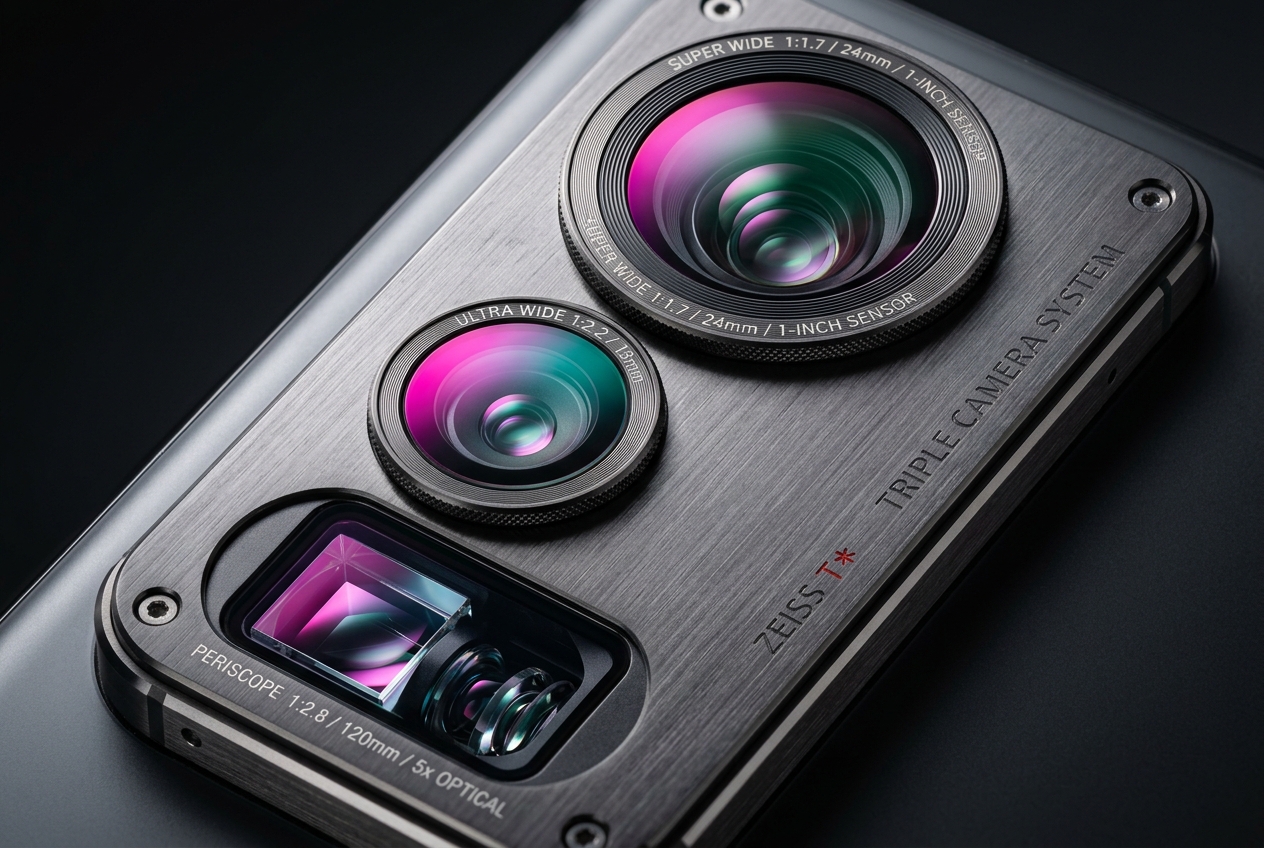
Look closely at the rear camera module of almost any sub-₹15k phone advertising a "Triple Camera System." You will invariably find:
- A legitimate 50MP primary camera.
- A 2MP "depth sensor" or "AI lens" with a tiny pinhole aperture.
- A 2MP "macro lens" producing noisy, low-resolution 1600 × 1200 pixel shots that no one ever prints or shares.
These secondary lenses cost manufacturers less than ₹80 ($1) per unit and are installed purely to decorate the rear chassis with extra camera rings. A smartphone with a single great 50MP main camera and an ultra-wide lens (like the Samsung Galaxy M15) delivers infinitely higher photographic utility than any phone equipped with twin decorative 2MP plastic sensors.
7. Battery Longevity & Charging Speeds: 5,000mAh vs 6,000mAh Realities
5G cellular modems consume between 15% and 25% more electrical energy than 4G LTE modems, especially when switching between low-frequency coverage bands and high-frequency data bands during travel. Consequently, battery capacity has become a critical reliability metric in India.
5,000mAh vs 6,000mAh: Which Fits Your Lifestyle?
- 5,000mAh Cell (Moto G45, Realme P1, POCO M6 Pro): Delivers 6.5 to 7.5 hours of active Screen-on-Time (SoT). For typical white-collar office commuters or college students, this comfortably covers an entire 14-hour day from 8:00 AM to 10:00 PM with 20% battery remaining. The major advantage is form factor: phones stay under 190 grams and measure under 8mm thin.
- 6,000mAh Monster Cell (Samsung Galaxy M15, iQOO Z9x): Delivers 9 to 11 hours of active Screen-on-Time. This is the ultimate choice for gig-economy delivery professionals (Zomato, Swiggy, Zepto riders), frequent highway travelers, and heavy mobile gamers who need two full days of uninterrupted service. The trade-off is ergonomic weight: these devices weigh between 205 and 218 grams.
Real-World Charging Speeds Compared
| Charging Wattage | Battery Capacity | 0% to 50% Top-Up Time | Full 0% to 100% Charge Time | Typical In-Box Status |
|---|---|---|---|---|
| 18W / 20W Standard | 5,000 mAh | 42 Minutes | 1 Hour 50 Minutes | Usually included in box |
| 25W Fast (Samsung) | 6,000 mAh | 38 Minutes | 1 Hour 40 Minutes | Not included (Buy separately) |
| 33W Turbo | 5,000 mAh | 28 Minutes | 1 Hour 10 Minutes | Included in box |
| 44W / 45W SuperVOOC | 5,000 – 6,000 mAh | 25 Minutes | 58 Minutes | Included in box |
8. Software Cleanliness & Ad Hygiene: Hello UI vs One UI vs HyperOS
Hardware specifications mean nothing if your daily user interface is hijacked by full-screen spam, intrusive lockscreen wallpaper carousels, and persistent push notifications from predatory loan apps. In the Indian market, software cleanliness varies dramatically across manufacturers:
1. Motorola Hello UI (Grade: A+)
Motorola offers the gold standard of budget Android software. Running near-stock Android with tasteful customization touches (Moto Gestures like double-chop for flashlight and twist for camera), Hello UI features zero system ads, zero lockscreen monetization overlays, and zero third-party junk pre-loaded. It is clean, responsive, and respectful of user privacy.
2. Samsung One UI Core (Grade: B+)
Samsung's One UI Core provides a polished, feature-rich interface backed by enterprise-grade Knox security. While Samsung occasionally suggests partner apps during initial setup and pushes notifications via the Samsung Shop app, it does not inject advertisements into system utility apps (Calculator, Weather, File Manager). Disabling the "Glance on Samsung" lockscreen carousel takes just two taps in the settings menu.
3. Xiaomi / POCO HyperOS & Realme UI (Grade: C+)
While HyperOS and Realme UI are exceptionally fluid and customizable, they are monetized aggressively to offset hardware costs. Upon initial boot, users will encounter:
- Pre-installed bloatware games and shopping applications.
- "Glance" lockscreen news stories that burn cellular data in the background.
- App scanner splash screens displaying banner ads after every Play Store installation.
Sanitization Tip: During initial setup, carefully uncheck "Glance," "Lockscreen Wallpapers," "Personalized Ad Tracking," and "User Experience Program." In the system file manager and theme store settings, toggle off "Receive Recommendations" to silence 90% of push notifications.
9. Essential Pre-Checkout & RAM Configuration Checklist
Before authorizing your payment on Amazon or Flipkart, execute this 5-point verification checklist to ensure you do not buy an under-specced variant:
- Demand 6GB RAM as Your Absolute Floor: While manufacturers offer cheaper 4GB RAM base models to advertise sub-₹11,000 prices, 4GB RAM is insufficient for smooth 5G Android multitasking in 2026. Background apps will constantly reload, keyboard pop-ups will stutter, and navigation apps will crash during incoming calls. Paying an extra ₹1,000 to ₹1,500 to secure the 6GB RAM / 128GB storage variant is the single smartest investment you can make.
- Verify Dual-Band Wi-Fi (5GHz): Confirm the phone supports 802.11ac (5GHz Wi-Fi). Certain bottom-tier phones ship with only 2.4GHz single-band Wi-Fi, capping home broadband speeds at 40 Mbps even if you have a 300 Mbps fiber connection.
- Check Widevine L1 Certification: Ensure the device has Widevine L1 DRM security. Without L1, streaming services like Netflix, Amazon Prime Video, and Disney+ Hotstar will downgrade playback to blurry 480p standard definition.
- Check Price Drops on PriceHunt Mobiles: Cross-check the handset against competing platforms and historical pricing using our Price History Tracking Guide to avoid artificial pre-sale price hikes. (For higher-budget ₹20,000 to ₹30,000 options, explore our Upper Mid-Range 5G Guide).
- Confirm In-Box Contents: If purchasing a Samsung handset, add an authentic 25W Type-C adapter to your cart to avoid arriving home with a phone you cannot charge.
10. Frequently Asked Questions
Which is the best 5G phone under ₹15,000 for gaming (BGMI and Free Fire)?
The Realme P1 5G (powered by MediaTek Dimensity 7050) and iQOO Z9x 5G (Snapdragon 6 Gen 1) are the performance leaders in this bracket. Both deliver stable 40 to 60 FPS gameplay on medium-to-high graphics settings with excellent thermal management.
Will a sub-₹15,000 5G phone work on both Jio and Airtel 5G networks?
Yes, provided the phone supports the requisite frequency bands. Ensure the handset supports Band n28 (700MHz) and Band n78 (3500MHz) for Jio True 5G (SA), and Bands n78, n8, and n3 for Airtel 5G Plus (NSA). All top 5 recommended models in this guide feature full dual-carrier compatibility.
Is 4GB RAM enough for an Android 5G phone in 2026?
No. Modern Android operating systems and background messaging apps consume approximately 2.8GB to 3.2GB of RAM on idle boot. A 4GB device leaves virtually zero memory headroom, causing severe lag and frequent app restarts. Always choose the 6GB or 8GB RAM variant for long-term reliability.
Why do phones under ₹15,000 have two 2MP cameras on the back?
The 2MP macro and depth sensors are low-cost cosmetic additions installed by manufacturers to market "triple camera" setups. They offer negligible photographic utility. Base your camera evaluation solely on the sensor size and software tuning of the primary 50MP camera.
Which brand offers the cleanest, ad-free software under ₹15,000?
Motorola (Hello UI) offers the cleanest software in this segment, free from lockscreen ads, intrusive push notifications, and pre-installed bloatware. Samsung (One UI Core) is a strong second place with minimal ads and industry-leading 4-year OS upgrade commitments.